Ceramic Vs. Cermet Coatings: Which One Fits Your Application?
When choosing a pipe coating for your plumbing system, you may be debating between ceramic and cermet coatings. There is no one size fits all answer as to which one is best; it will all depend on the qualities you require, which will be based on the environmental conditions your pipes are performing under.
In this article, we share with you more about the qualities of both ceramic and cermet coatings, allowing you to make a well-informed decision!
Understanding the Two Different Materials
In order to understand the differences between the two materials, you will first have to know what they are. Ceramics is a hard and brittle material that is obtained by burning nonmetallic minerals and rocks at a high temperature.
On the other hand, cermet is considered a composite material as it is made up of both ceramic and metals, such as cobalt and nickel. Most cermets are predominantly made up of ceramic, with metal particles being attached to them.
More precisely, a cermet is built from a metal or alloy acting as the adhesive phase, with metal and ceramic particles forming the reinforced hard phase. Zirconia-plus-nickel and alumina-plus-nickel are common examples. The metal content is typically kept below 20% by volume, with cobalt, molybdenum, and nickel as the most common metallic elements, and binders drawn from carbides, borides, or oxides. The goal is to combine the best of each material: metal’s ability to deform plastically under stress, and ceramic’s hardness and high temperature resistance.
In a sense, cermet can provide you with the best of both worlds as it is used in applications where neither ceramic nor metal alone would suffice. This is most often in industrial applications. Cermet is particularly known for its wear resistance under unlubricated conditions.
Hardness and Toughness
One well-known fact about ceramic is how resistant it is against abrasion. This ensures that it will hold up well against harsh environmental conditions and maintain the structural integrity of your pipes.
However, if your pipes need to perform under conditions of high mechanical stress, you may find that cermet coating is a better option. It is able to provide excellent friction when rubbing against metal surfaces, hard surfaces as well as other cermet-coated surfaces.
This advantage comes directly from the metal content. As metal is added to a ceramic coating, bonding strength between the matrix material and the coating increases, and densification improves, though porosity decreases as a result. The outcome is a coating with better mechanical properties than pure ceramic, which is why cermet performs well under high fatigue and stress conditions where a straight ceramic coating would be more likely to crack.
How much of an advantage depends on several factors: particle size, the proportion and composition of metal to ceramic, the performance of the ceramic phase and the metal base individually, and how deeply the ceramic and metal infiltrate each other during processing. That degree of mutual infiltration is what determines the adhesion strength both between the coating and the base metal, and between the coating’s own components.
Thermal Resistance
Next, let’s take a look back at thermal resistance. If your plumbing system is involved in the process of heat transfer, you will find that cermet coating suits your purposes better as it is able to perform well under extreme fluctuations in temperature. This is especially true if there are stabilizing additives, such as magnesium, added to the coating.
Corrosion Resistance
Maybe what you are looking for is superior corrosion resistance. After all, you want your plumbing system to continue being used for as long as possible. When it comes to protection against corrosion, you will want to opt for ceramic coating over cermet coating.
Common Cermet Coating Types
Cermet coatings aren’t one formulation. The most commonly used types include:
- Coated hard wear-resistant cermet coating
- Tungsten carbide dispersion self-fused alloy coating
- Cemented carbide coatings
- High-friction cermet coating
- Anti-friction self-lubricating cermet composite coating
- Abrasion seal cermet coating
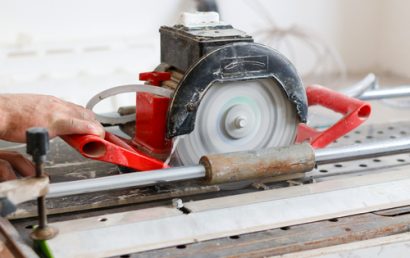
Outside of plumbing applications, cermets commonly show up in brazed tools such as saws, where they replace tungsten carbide for better corrosion and wear resistance, and in electronic components like capacitors and resistors, where their high temperature resistance is the draw.
A&A Thermal Spray Coatings Can Provide You with the Solutions You Need
Regardless of the specific coating material that suits your purposes, you can be sure of finding it at A&A Thermal Spray Coatings. If you are unsure which material will best suit your needs, our team is able to provide you with a recommendation after understanding your concerns and requirements. We are committed to meeting our customer’s needs and solving any problems you may have, which is what has allowed us to develop as an industry leader since our inception more than 70 years ago! Call 888-725-0150 or request a quote online.